

LED Lighting Replacing CFL on More Campuses
Q&A: Gary Gerber, Sun Light & Power
Insurance Options Grow for Green Buildings
U.S. Schools Push for Platinum
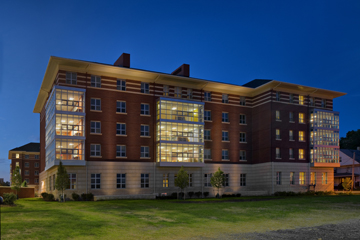
School districts and architectural firms nationwide are pushing the envelope in green school design, seeking out new and efficient HVAC systems, lighting methods, water and irrigation tools, and other ways to make academic buildings lean and green.
Rachel Gutter, director of the Center for Green Schools at the U.S. Green Building Council, says that just building a green school is no longer enough, and that achieving LEED certification is increasingly becoming a hallmark of sustainable design to a building’s constituents, as well as to the greater community.
A LEED Lockup
Sustainable Hospitals 2011 — May 4-6

Tech-Based Innovation Fuels Energy Management Sector
Flexibility and Reuse Drive Modular Industry
The modular construction industry has for many years practiced flexible design and reuse. In fact, many companies in the modular industry recycle entire buildings for different applications. One of the unique aspects of modular construction is that it is more readily designed for deconstruction. The fact that the building is assembled in modules means that it can be disassembled at the end of its useful life. In many cases, entire buildings are repurposed and reused for secondary needs at secondary locations.