

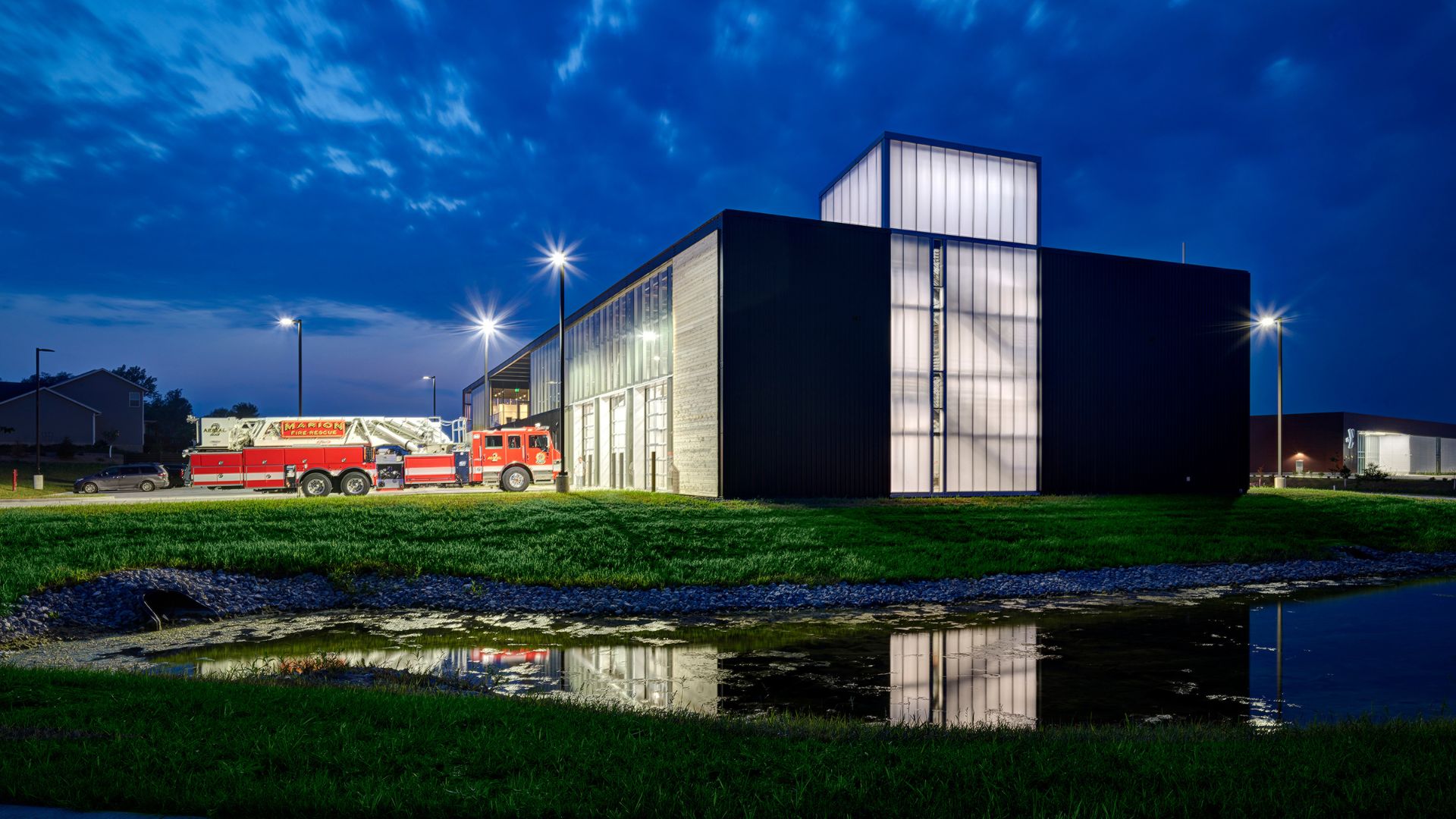
Marion Fire Station No. 1 in Marion, Iowa, demonstrates how biophilic principles can be applied within a demanding civic environment. | Photo Credit: Courtesy of Kingspan Light + Air
By Neall Digert, Ph.D., MIES
As expectations for high-performance buildings continue to evolve, sustainability is increasingly about more than reducing energy consumption. Architects, facility owners and project teams are also considering how the built environment affects the health, comfort and performance of the people who occupy it.
Biophilic design offers an opportunity to address both priorities. By creating meaningful connections between people and nature, these strategies can support occupant well-being while complementing broader sustainability and building performance goals. Natural daylight can play a particularly important role, but simply introducing more sunlight into a building is not enough. Successful daylighting requires careful consideration of how light is captured, controlled and distributed throughout a space.
Designing Daylight Around People

The 14 Patterns of Biophilic Design identifies “Dynamic & Diffuse Light” as one of the core patterns for incorporating experiences of nature into the built environment. The framework examines connections between biophilic design and outcomes related to stress reduction, cognitive performance, emotion and mood enhancement.
Research into workplace daylight provides further insight. A study published in the Journal of Clinical Sleep Medicine found that workers in environments with windows received more light exposure during the workweek and reported better overall sleep quality than workers in environments with little or no daylight exposure. Another study examining optimized daylight and views found that participants in an optimized environment slept 37 minutes longer and performed 42% better on cognitive simulations designed to measure higher-order decision-making.
For building teams, however, the goal should not simply be maximizing sunlight. Direct sunlight can introduce glare, excessive visual contrast and unwanted solar heat gain, potentially undermining occupant comfort. Effective daylighting requires balancing daylight quantity with daylight quality through strategies that distribute natural daylight while controlling these potential challenges.
This balance can also support sustainability. The U.S. Department of Energy notes that properly designed and integrated daylighting can reduce lighting energy, peak electrical demand and cooling energy in commercial buildings while emphasizing the importance of limiting direct sunlight that can contribute to glare and excessive heat gain.
Putting Biophilic Principles Into Practice
Marion Fire Station No. 1 in Marion, Iowa, demonstrates how these principles can be applied within a demanding civic environment.
The two-story, 21,000-square-foot facility was designed by OPN Architects to serve as the Marion Fire Department’s administrative headquarters while providing training, fitness, living and operational spaces. From the project’s inception, health-centric design was a priority. With mental health representing a significant consideration for firefighter wellness and preparedness, the fire chief tasked the team with designing the facility to serve as a national benchmark for integrating biophilic design to help reduce post-traumatic stress disorder among firefighters.
Dynamic and diffuse daylight became an important part of that strategy. The project team focused on delivering ample natural daylight indoors to promote firefighters’ mental health, visual acuity and focus, particularly within training and exercise areas. At the same time, the design needed to control glare and solar heat gain and maintain privacy during rigorous activities.
To address these needs, the project team integrated Kingspan Light + Air’s UniQuad® translucent wall system into the building envelope of the training tower. The system delivers high levels of diffuse natural daylight while obscuring direct views. By diffusing daylight rather than allowing direct sunlight to penetrate the space, the panels reduce visual contrast and glare while limiting solar heat gain, helping support focus, safety and overall occupant comfort.
Daylight was only one component of the station’s broader biophilic approach. Large windows were strategically incorporated to introduce daylight and provide carefully curated direct views outdoors for visual relief and mental stimulation. The project team also incorporated landscaped areas, a retention pond, exterior gathering spaces and materials reflecting natural shapes, features and patterns. Beyond biophilic design, strategic sequencing between the bays and living areas was implemented to help mitigate firefighters’ exposure to carcinogens in fire and ash.
The completed station earned an AIA Architecture Award. Retired Marion Fire Chief Debra Krebill has praised the impact of its biophilic environment, noting that feeling calm and comfortable within the building can help firefighters with their relationships and everyday stresses.
Applying the Lessons Beyond Public Safety
The lessons from Marion extend beyond fire stations. Civic buildings, workplaces, other commercial facilities and healthcare environments can benefit from considering daylight as part of a broader human-centered sustainability strategy.
Project teams should consider how daylight changes throughout the day, where and how glare or heat gain may occur, what level of privacy occupants require and what activities will take place within each space. The objective is not simply to introduce more daylight, but to deliver it in a way that responds to the needs of both the building and its occupants.
When considered early in the design process, daylighting can become more than an energy strategy. Combined with views to nature and other biophilic elements, it can help create spaces that address environmental performance while supporting the health and comfort of the people who use them.
As sustainable design continues to evolve, energy efficiency, occupant wellness and connection to nature do not have to be competing priorities. Thoughtful, integrated design can allow each to reinforce the others.
Neall Digert, Ph.D., MIES, is Vice President of Innovation and Market Development at Kingspan Light + Air.